Meet the Horse Breeds of the Iberian Horse Alliance

Andalusian Horse (PRE)
Andalusian Horse (PRE)
Andalusian Horse (PRE)
The Andalusian or Pura Raza Española, also known as the Pure Spanish Horse or PRE, is a Spanish breed of riding horse from the Iberian Peninsula, where its ancestors have lived for thousands of years. The Andalusian has been recognized as a distinct breed since the 15th century, and its conformation has changed very little over the centuries.
* LG ANCCE Stud Book

Lusitano (PSL)
Andalusian Horse (PRE)
Andalusian Horse (PRE)
The Lusitano, also known as the Pure Blood Lusitano or PSL (Puro Sangue Lusitano), is a Portuguese horse breed. The Portuguese horse was named the Lusitano, after the word Lusitania, the Roman name for the region that Portugal occupies. There are four main breed lineages within the breed and characteristics differ slightly between each line.
* APSL (Portugal) Stud Book

S/P
Andalusian Horse (PRE)
S/P
S/P refers to Spanish/Portuguese horse breeds, specifically Andalusian and Lusitano horses, or their crosses. These Iberian horses are known for their Baroque type, agility, intelligence, and high trainability often utilized in classical dressage, bullfighting, and show jumping.
* IALHA (International Andalusian & Lusitano Horse Association) Breed Association

Alter Real Lusitano
Alter Real Lusitano
Alter Real Lusitano
The Alter Real breed is considered a particularly thoroughbred line of Lusitano horses based on the great similarity and the close bloodline. Established in 1748 by King João V, this stud farm was created with one purpose—to breed the finest horses for the Portuguese royal court.
Discover the Alter Real Lusitano
Carthusian
Alter Real Lusitano
Alter Real Lusitano
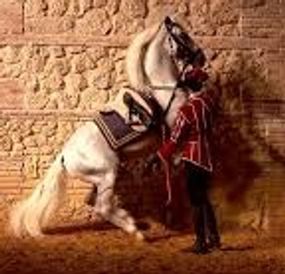
The Carthusian horse, also known as Cartujano in Spanish, is a bloodline group within the Purebred Spanish horse (PRE). Its lineage can be traced back to 1476, which supports claims that its breed registry is one of the oldest in the world. This breed is commonly utilized in dressage and is well-suited for combined driving.
American Azteca
Alter Real Lusitano
American Azteca
Andalusian or Lusitano cross with Quarter Horses and Criollo The American Azteca Horse International Association (AAHIA) was formed in 1999. The AAHIA united with American's 1st Azteca horse registry the Azteca horse Registry of America (AHRA), which started registering horses in 1989.
*American Azteca Horse International Association (AAHIA)
Ameritanos
American Mustang
American Mustang
Ameritano horses are a crossbreed developed by breeding Portuguese Lusitanos with National Foundation Quarter Horses (NFQHA), combining Iberian agility with American ranch-horse cow sense. Designed for versatility, working equitation, dressage, reining, and ranch work, often featuring sturdy, athletic builds.
*AMERITANOS can be registered with IALHA & Ameritano Registry
American Mustang
American Mustang
American Mustang
The mustang is a free-roaming horse of the Western United States, descended from horses brought to the Americas by the Spanish conquistadors.
* A Certificate of Title for a Mustang from the BLM that transfers ownership from the federal government to a private owner.
Appaloosa
American Mustang
Appaloosa
The foundation stock for the Appaloosa originated from spotted horses brought by Spanish conquistadors, which had roots in the Iberian Peninsula where such horses were prized.
Nez Perce Development: The Nez Perce (Niimipu) tribe in North America selectively bred these imported horses for speed, hardiness, and color in the 18th and 19th centuries, forming the breed known today.
Azteca
Bashkir Curly
Bardigiano
The Azteca is a versatile, athletic, and intelligent horse breed from Mexico, established in 1972 as the nation's "national horse". Developed by crossing Andalusian, Quarter Horse, and Criollo breeds, they are known for their strength, cow sense, and elegant, graceful movement.
*Asociación Mexicana de Criadores de Caballos de Raza Azteca
Bardigiano
Bashkir Curly
Bardigiano
The Bardigiano is a traditional Italian breed of small horse. It originates in the region of Emilia Romagna and takes its name from the town of Bardi. It is a robust and hardy horse, agile and sure-footed. A stud-book was established in 1977 and is held by the Associazione Provinciale Allevatori of Parma.
* NABHB in Italy
Bashkir Curly
Bashkir Curly
Bashkir Curly
The origin of the breed is Iberian. The Curlies are known for their calm, intelligent and friendly personality. They show an easily trainable temperament. They are also known for having a tough constitution and great stamina. Most people have found that the curlies enjoy being around people.
Basque Mountain Horse
Basque Mountain Horse
Basque Mountain Horse
The Basque Mountain Horse, is a Spanish breed of horse from the autonomous community of Euskadi. It is listed in the official catalogue of livestock breeds of Spain, in the group of autochthonous breeds in danger of extinction.
* Catálogo Oficial de Razas de Ganado de España
Boulonnais Horse
Basque Mountain Horse
Basque Mountain Horse
The Boulonnais, also known as the "White Marble Horse" is a draft horse breed. It is known for its large but elegant appearance and is usually gray, although chestnut and black are also allowed by the French breed registry.
* North American Boulonnais Association
Caballo Serranillo
Basque Mountain Horse
Caballo Serranillo
The Caballo Serrano (Serrano Horse) is an ancient, native, and critically endangered breed from the mountains of the Iberian interior. While traditional, it is recognized as hardy breed that has survived in wild, free-roaming herds after the decline of mechanization in the 1960s/70s.
* Asociación de Criadores de Caballo Serrano
Camarillo White Horse
Camarillo White Horse
Camarillo White Horse
The Camarillo White Horse is known for its pure white color, which includes pink skin under the white hair coat. Camarillo White horses are white from birth and remain white throughout their lives. Founded by Adolfo Camarillo, the breed traces back to a Spanish Mustang stallion named Sultan.
Carolina Marsh Tacky
Camarillo White Horse
Camarillo White Horse
A rare, hardy breed from South Carolina used for farm work and hunting.
The Carolina Marsh Tacky or Marsh Tacky is a critically endangered breed of horse, native to South Carolina. It is a small horse, well-adapted for use in the lowland swamps of its native South Carolina.
* Carolina Marsh Tacky Association
Catalan Pyrenean
Camarillo White Horse
Catalan Pyrenean
The Catalan Pyrenean is a robust, native mountain breed from the Pyrenees, primarily reared in semi-extensive, harsh conditions in Catalonia, Spain, for meat production and draught work. These horses are known for their strength, adaptability to rocky terrain, and naturally shaped, hardy hooves.
Carter Reservoir Mustangs
The unique wild horses known as the Carter Reservoir Spanish-Iberian Mustangs
The BLM-managed wild Carter Herd in northern California is relatively unknown in wild horse and burro circles and among the general public.
Choctaw
Preserved by the Choctaw Nation, these are considered very pure Colonial Spanish horses.
The Choctaw Horse is an American breed or strain of small riding horse of Colonial Spanish type. Like all Colonial Spanish horses, it derives from the horses brought to the Americas by the Conquistadores.
Colonial Spanish Mustang or Banker
Colonial Spanish Mustang or Banker
The Colonial Spanish Mustang is a rare horse breed descended from Iberian stock brought to the Americas by Spanish explorers, known for toughness, intelligence, and often being gaited (like a running walk), with distinct populations like the wild Banker horses of North Carolina's Outer Banks.
Corolla Wild Horse or Bankers
Corolla Wild Horse or Bankers
Corolla Wild Horse or Bankers
Feral horses found on the Outer Banks of North Carolina, descendants of 16th-century Spanish shipwrecks. The Banker horse is a breed of feral horse living on barrier islands in North Carolina's Outer Banks. It is small, hardy, and has a docile temperament.
Costa Rican Saddle Horse
Corolla Wild Horse or Bankers
Corolla Wild Horse or Bankers
The Costa Rican Paso, or Costarricense de Paso, is the national horse breed of Costa Rica, officially recognized in 1994. The Costa Rican Saddle Horse is a horse breed developed in Costa Rica. Since 1850 breeders of the Costa Rican horse have paid more attention to the selection of breeding stock.
* * ASCACOPA Asociación de Criadores del Caballo Costarricense de Paso
Criollo
Corolla Wild Horse or Bankers
Criollo
The Criollo is the native horse of the Pampas (a natural region between Argentina, Brazil, and Uruguay, in South America), with a reputation for long-distance endurance linked to a low basal metabolism. The breed, known for its hardiness and stamina, is popular in its home countries.
* Criollo Horse Association
Cruzado
Delta or Camargue Horse
Delta or Camargue Horse
The Cruzado horse is an Iberian crossbreed. Highly valued for their versatility, intelligence, and kind temperament, these horses combine the best traits of both breeds, often used for dressage, working equitation, and leisure riding.
*IALHA International Andalusian and Lusitano Horse Association
Delta or Camargue Horse
Delta or Camargue Horse
Delta or Camargue Horse
The Cavallo del Delta (Delta Horse) is a rare, indigenous Italian breed originating from the Po Delta region, specifically the wetlands of Emilia-Romagna and Veneto. Known for its hardiness, it has ancestral links to French Camargue horses, which contributed to its adaptability in marshy environments.
* Association of Camargue Horse Breeders
Florida Cracker Horse
Delta or Camargue Horse
Florida Cracker Horse
Developed in Florida from Spanish stock, known for being fast and agile. The Florida Cracker Horse is a critically endangered horse breed from Florida. It is genetically and physically similar to many other Spanish-style horses, especially those from the Spanish Colonial horse group.
*Florida Cracker Horse Association
French Camargue
Galego or Galician
Galego or Galician
The French Camargue is a traditional French breed of working horse indigenous to the Camargue area in southern France.
The Camargue horse is the traditional mount of the gardians, the Camargue riders who herd the black Camargue bulls used for courses camarguaises in southern France.
* Association des Eleveurs de Chevaux de Race Camargue (AECRC)
Galego or Galician
Galego or Galician
Galego or Galician
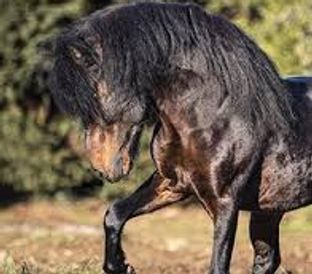
The Galician or Raza Equina Cabalo Galego do Monte, is a breed of small horse from Galicia, in north-western Spain.
Medium in size, its compact body exhibits well-developed musculature, evidence of its endurance and agility.
* Purebred Galician Horse Association
Hispano-Árabe
Galego or Galician
Hispano-Árabe
The Hispano-Árabe is a Spanish horse breed originating from the cross-breeding of Arab and Andalusian horses. The Hispano-Árabe is a saddle-horse, suitable for equestrian sports such as show-jumping, dressage, cross-country, endurance and TREC; as a working horse for doma vaquera.
* Unión Española de Ganaderos de Pura Raza Hispano-rabe
Hispano-Bretón
Ibero Costa Rica Horse
Iberian Warmblood
The Hispano-Bretón is a relatively rare Spanish breed obtained by crossing the PRE (Andalusian) with the French Breton draft/draught. These horses can be used as riding mounts or for farm work, and tend to look like a heavier (draft type) version of the PRE.
Iberian Warmblood
Ibero Costa Rica Horse
Iberian Warmblood
An Iberian Warmblood is a versatile sport horse blending the grace and trainability of Iberian breeds (Andalusian/Lusitano) with the athleticism of European warmbloods and Thoroughbreds, creating an intelligent, agile horse ideal for dressage, eventing, and jumping, typically standing 15-17 hands high with a willing, sensitive temperament.
*Iberian Warmblood Registry
Ibero Costa Rica Horse
Ibero Costa Rica Horse
Ibero Costa Rica Horse
The Ibero horse in Costa Rica is a versatile, elegant, and athletic breed developed by crossing the Andalusian (PRE) with the Costa Rican Paso or other Iberian breeds (Lusitano). Created in 1991, this breed combines the size and temperament of the Andalusian with the energy and high-stepping action of local horses.
Kiger & Pryor Mt. Mustangs
Kiger & Pryor Mt. Mustangs
Kiger & Pryor Mt. Mustangs
Specific wild herds in the Western US that exhibit high concentrations of Spanish bloodlines. The Pryor Mountain mustang is a substrain of mustang considered to be genetically unique and one of the few strains of horses verified by DNA analysis to be descended from the original Colonial Spanish horses .
* Kiger Horse Association & Registry (KHAR)
Knabstrupper
Kiger & Pryor Mt. Mustangs
Kiger & Pryor Mt. Mustangs
The Knabstrupper descends from a single mare believed to have originated in Spain who showed qualities of endurance and speed and was of an unusual coloration. The Knabstrupper or Knabstrup is a Danish breed of warmblood horse. It is principally a riding horse, but is also used as a harness horse.
* Knabstrupperforeningen for Danmark (KNN)
Lipizzan
Kiger & Pryor Mt. Mustangs
Lipizzan
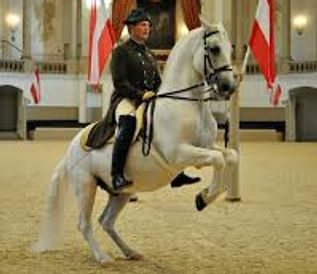
The Lipizzan or Lipizzaner is a European breed of riding horse developed in the Habsburg Empire in the sixteenth century. It is of Baroque type, and is powerful, slow to mature and long-lived; the coat is usually gray.
*United States Lipizzan Foundation
Mallorquin
Mangalarga Marchador
Mangalarga Marchador
The Mallorquín is a rare Spanish breed of horse indigenous to the island of Mallorca in the Balearic Islands, from which it takes its name. Identification of the breed was begun in 1981 by the Patronato para las Razas Autóctonas de Mallorca.
* Breeders and Owners Association of Menorca Horse
Mangalarga Marchador
Mangalarga Marchador
Mangalarga Marchador
The Mangalarga Marchador is a Brazilian breed. It is the national horse breed of Brazil, where there are more than half a million of them; it is among the most numerous breeds of riding horse in the world. It derives from cross-breeding of Portuguese Alter Real horses with local Criollo stock.
* Asociación Brasileira dos Criadores do Cavalo Mangalarga Marchador (ABCCMM)
Marsh Tacky Horse
Mangalarga Marchador
Marsh Tacky Horse
The Marsh Tacky is a rare, historically significant Colonial Spanish horse breed native to South Carolina, designated as the state's heritage horse in 2010. Small and sturdy (typically 14–14.2 hands). Critically endangered with only about 500 left, these intelligent horses are known for being easy-keepers and versatile.
*Carolina Marsh Tacky Association
Monchino
Paso Fino
Monchino
The Monchino is a breed of horse indigenous to the Valle de Guriezo in the Cantabria region of northern Spain and extending into neighboring Biscay province. It is listed in the Official Catalogue of Livestock Breeds of Spain in the group of breeds in danger of extinction.
* Catálogo Oficial de Razas de Ganado de España
Nokota
Paso Fino
Monchino
The Nokota developed in the 19th century from foundation stock consisting of ranch-bred horses produced from the horses of local Native Americans mixed with Spanish horses. The Nokota was almost wiped out during the early 20th century.
* The Nokota Horse Conservancy
Paso Fino
Paso Fino
Paso Fino
The Paso Fino is a naturally gaited light horse breed dating back to horses imported to the Caribbean from Spain. Pasos are prized for their smooth, natural, four-beat, lateral ambling gait; they are used in many disciplines, but are especially popular for trail riding.
*Paso Fino Horse Association
Painters Barb
Pirinenc Català
Painters Barb
Painter Barbs are a rare, foundation-type strain of Spanish Barb horses established by Robert Painter through 70 years of selective breeding of wild, desert-type horses. These horses are known for their hardiness, intelligence, and conformation, tracing back to the horses brought to the Americas by Spanish conquistadors.
* International Barb Horse Registry
Peruvian Paso
Pirinenc Català
Painters Barb
The Peruvian Horse is a breed of light saddle horse known for its smooth ride. It is distinguished by a natural, four-beat, lateral gait called the paso llano.This breed has been declared a Cultural Heritage of the Nation by the National Institute of Culture (INC).
*North American Peruvian Horse Association
Pirinenc Català
Pirinenc Català
Pirinenc Català
The Cavall Pirinenc Català (Catalan Pyrenean Horse) is an endangered breed of heavy horse native to the Pyrenees in Catalonia, northeastern Spain, with a recognized studbook and official registry.
* Spanish Ministry of Agriculture, Fisheries and Food (MAPA)
Retuertas
Santa Cruz Island Horses
Santa Cruz Island Horses
The Retuertas horse is a rare equine breed indigenous to Spain (Andalusia region). Living in isolation from other horses for a long time has made it emerge as one of the popular feral breeds. It is found only in the Doñana National Park in the provinces of Huelva and Sevilla.
Santa Cruz Island Horses
Santa Cruz Island Horses
Santa Cruz Island Horses
The origin of this breed dates back to the 18th and 19th centuries when a small herd of Spanish Colonial horses were sent to Santa Cruz Island. After the National Park Service acquired the land in 1997 the horses were removed from the island despite the many efforts from those who believed they should stay. With fewer than sixty in existence.
*Santa Cruz Horses
Serranillo
Santa Cruz Island Horses
Serranillo
This is an ancient breed that is not included in the Official Catalogue of Livestock Breeds of Spain of the Ministry of Agriculture, Fisheries and Food, and therefore has no official recognition. Currently, its population is limited to the Lozoya Valley, in the northwest of the Community of Madrid, and they are raised in a semi-wild manner.
Sorraia
Spanish Mustang
Spanish Barb
The Sorraia horse, a critically endangered, primitive breed from Portugal with fewer than 200–500 individuals, is managed through studbooks focusing on preserving its unique genetic heritage, primarily in Portugal and Germany.
* Sorraia Registry
Spanish Barb
Spanish Mustang
Spanish Barb
A type known for its stamina and smooth gaits, heavily influencing ranching in the Southwest.
The Barb horse, also known as the Barbary horse, is a breed of riding horse with historic roots in North Africa. Known for its hardiness and stamina, it has influenced a number of modern breeds.
* Spanish Barb Horse Association
Spanish Mustang
Spanish Mustang
Spanish Mustang
The Spanish Mustang is an American horse breed descended from horses brought from Spain during the early conquest of the Americas. They are classified within the larger grouping of the Colonial Spanish horse, a type that today is rare in Spain.
Spanish-Norman
Spanish Trotter/ Trotador Español
Spanish Trotter/ Trotador Español
The Spanish Norman is an American horse of warmblood type, a crossbreed of the Andalusian and Percheron. In 1991, a registry was created in Connecticut in the United States to maintain records of the breed. The Spanish-Norman is bred primarily as a sport horse.
*Spanish Norman Horse Registry
Spanish Trotter/ Trotador Español
Spanish Trotter/ Trotador Español
Spanish Trotter/ Trotador Español
The Spanish Trotter, Spanish: Trotador Español, Catalan: Trotó Balear, is the national breed of trotting horse of Spain. It is reared almost exclusively in the Balearic Islands in the Mediterranean, predominantly in the island of Mallorca, but also in Menorca and Ibiza.
*Spanish Trotter Association
Sulphur Springs Mustang
Sulphur Springs Mustang
Sulphur Springs Mustang
The Sulphur Springs Mustang is a rare, protected strain of wild horse with direct Spanish ancestry, inhabiting the Needle Mountain Range in Southwestern Utah. Known as "Sulphurs" or the "Zebra Horse of Utah," they typically display dun or grulla coloring, primitive leg stripes, and dorsal stripes, resembling ancient cave paintings.
Trote e Galope
Sulphur Springs Mustang
Sulphur Springs Mustang
Gaited breed hails from Paso Fino and Lusitano bloodlines, creating poetry in motion with its diagonal smooth gait.
Ventaso Horse
Wilbur-Cruce Mission Horse
Ventaso Horse
An endangered Italian breed with medieval roots, is a rare breed of horse originating from the upper Val d'Enza valley in Italy. From the 1800s until the 1940s the military procured horses from this region. The Ventasso horse breed was formed in the 1960s through the crossing of a Lipizzaner stallion with Maremmano mares.
* Ventaso Horse Association
Warlander
Wilbur-Cruce Mission Horse
Ventaso Horse
The Warlander is a horse of Baroque type, produced by crossing Friesian horses with horses of a purebred registered Iberian horse breed such as the Andalusian, Lusitano, or Menorquín.
*Warlander Horse Society
Wilbur-Cruce Mission Horse
Wilbur-Cruce Mission Horse
Wilbur-Cruce Mission Horse
A rare herd from Arizona that descended from horses brought to mission farms in the 1600s. These baroque type horses are highly athletic, extremely versatile, and exquisitely well-balanced by nature. They possess a strikingly beautiful old world appearance. They are the original horse of the Vaquero, highly suitable for both working and performance purposes.